
Swiftwater Rescue “New Hotness” Series
Part 1 - Hold the throw rope under your arm
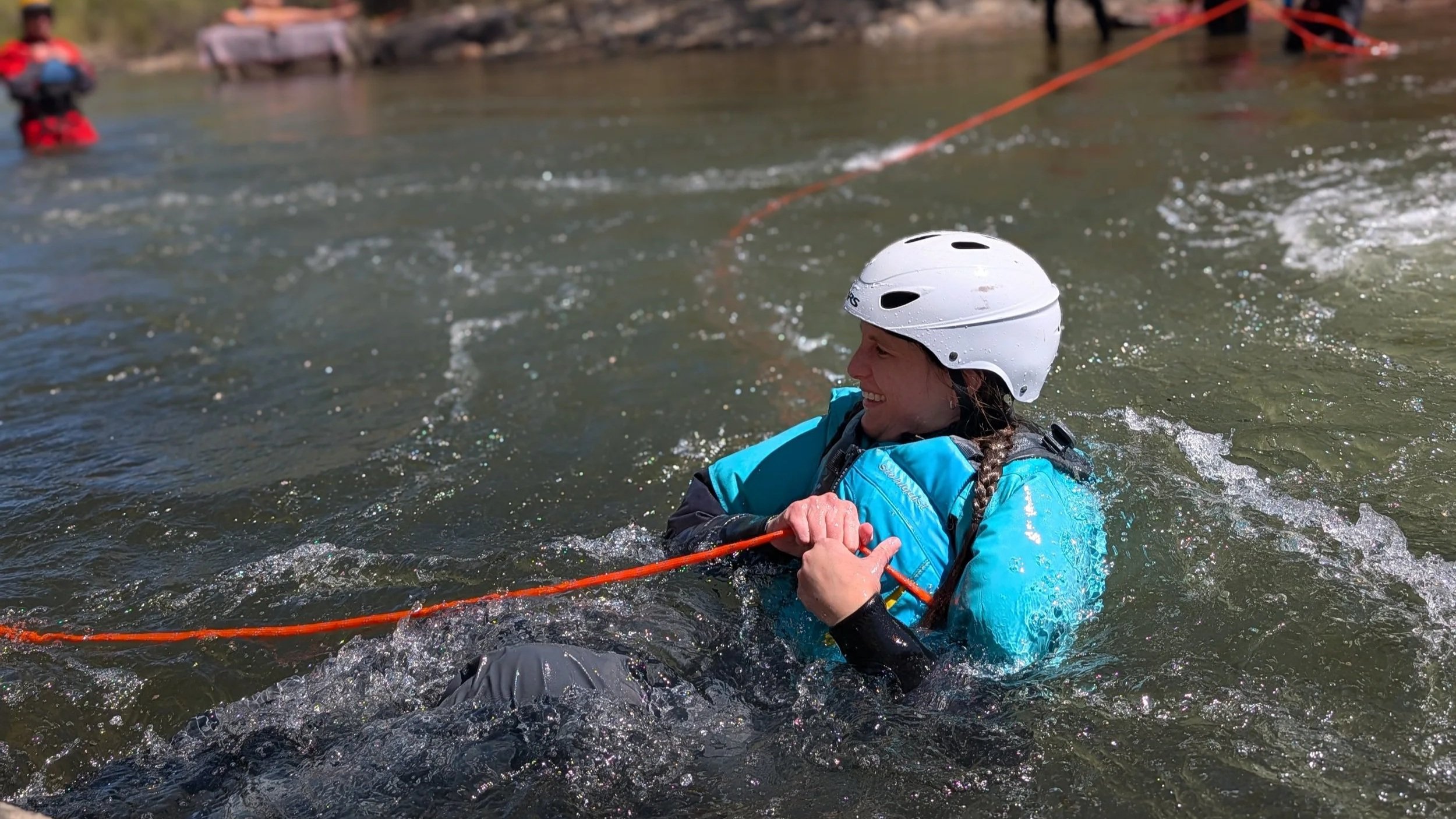
We’re starting a new series here on the newsletter (and the new blog). The Swiftwater Rescue “New Hotness”* series. In this series we’ll explain something that is changing in the way we teach the best practices of Swiftwater Rescue with the ACA. If it has been a few years since you last took a swiftwater rescue class, these might be eye opening. For the first part of this series, we’ll look at how swimmers hold a throw rope.
And of course, if you’re looking for a deeper dive, we’re still running our full 2-day Swiftwater Rescue coursesand Advanced Rescue classes (coming up in 2 weeks!) as well.
The Old Way
Historically we’ve taught that swimmers should hold the rope over their far shoulder when they are floating defensively as shown in this photo from Boreal River Rescue:
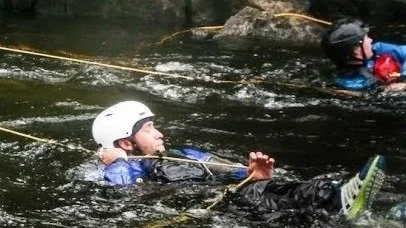
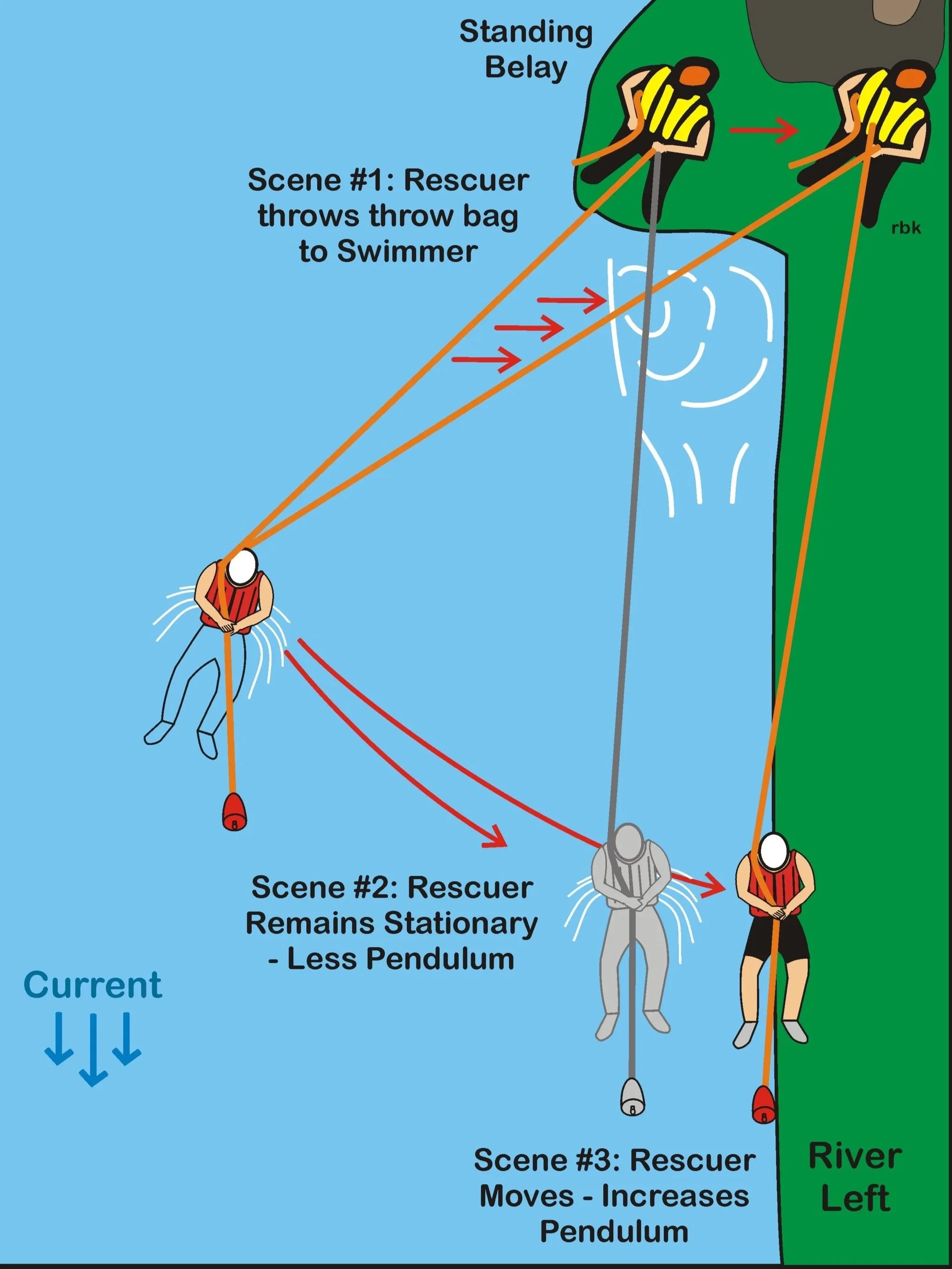
This technique is good because the swimmer is in a defensive position and their body is oriented in a way that helps their body swing to shore. If they put the rope over their other shoulder, it becomes much harder to swing them the last few feet into shore. You can see how this is supposed to work in this diagram from the excellent Swiftwater Rescue Course Manual from Frostburg University:
The New Hotness
This brings us to the new method we’ve started teaching. Putting the rope under your shoulder. The rope goes into the armpit and then is brought across the body like a body belay. This improves on the previous “over the shoulder” method in 3 ways.
It keeps the rope away from your neck where it could cause rope burn, get caught on a knife, or flip you over.
It allows the swimmer to use friction with their body to hold the rope rather than just their hands. Rope burn was always a huge problem with the old way of holding the rope. I’ve personally ripped open my hand trying to hold a rope that was thrown to me in Lava Falls on the Grand Canyon.
It changes the angle of the rope so that the swimmer’s head stays above the rope rather than below it. If the rope is held low to the river, or gets caught on something that pulls it down, the swimmer’s head stays out of the water.
Check out this photo from our class last month and compare it to the photo above. Note that the rivers are flowing in opposite directions in the two pictures.
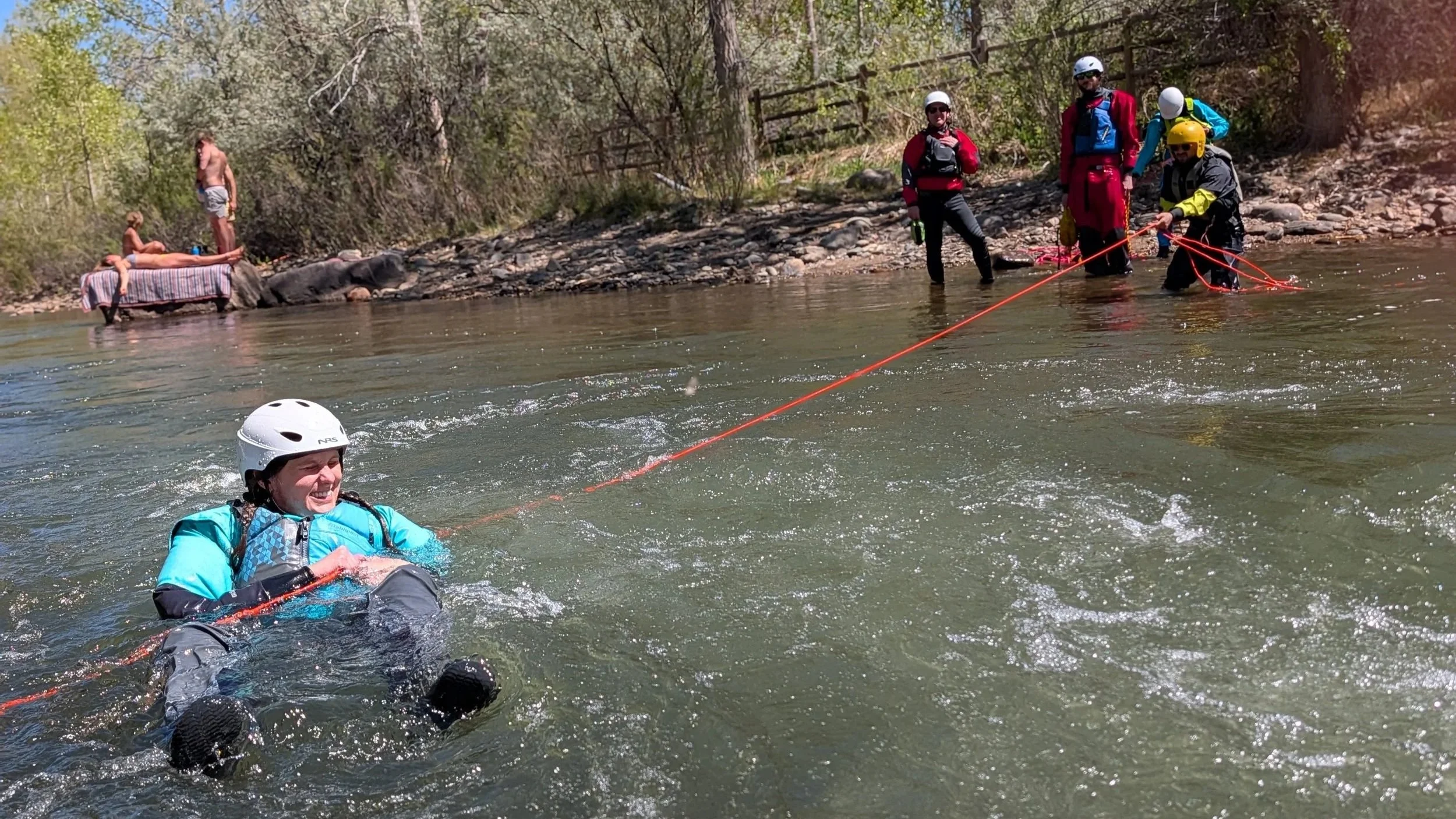
Our student’s head is far out of the water. She is pinning the rope to her PFD to make it much easier to hold. And the rope isn’t anywhere near her neck where it could cause rope burn or pull awkwardly. We love it!
So next time someone throws you a rope, after you figure our which side of your body to put it, try putting it under your armpit instead of over your shoulder. Let us know what you think. Most of our students have been really liking it, especially how much easier it is to hold in fast currents. That said, we’re always looking for feedback! Let us know what you think!
If you’d like to learn more of these new techniques but you’ve taken a swiftwater class before, check out our Advanced Class. We have one coming up in 2 weeks and usually offer one every year, perfect for people who already know how to swim, wade, and throw ropes, but want some more advanced techniques and coaching on the best times to use the techniques.
See you on the river!
-Nik
P.S. My wife would like to point out the irony of naming something the “New Hotness” when it’s based on a movie reference from 2002. I also like to include random outdoor videos at the end of these, so I’ll set this up by saying that I recently saw the new Netflix movie Apex. It was ok I guess and it continues the trend of whitewater in horror movies and only horror movies. It turns out Charlize Theron did not do her own kayak stunts but here is an interview with her stunt doubles. I had a good laugh at this interview Theron did about how hard it is to go straight in a whitewater kayak. It reminded me of this interview with Meryl Streep after The River Wild.
Also PS. If you received this by email, free to forward this to your friends. If this email was forwarded to you, you can subscribe here at the bottom of the page.
